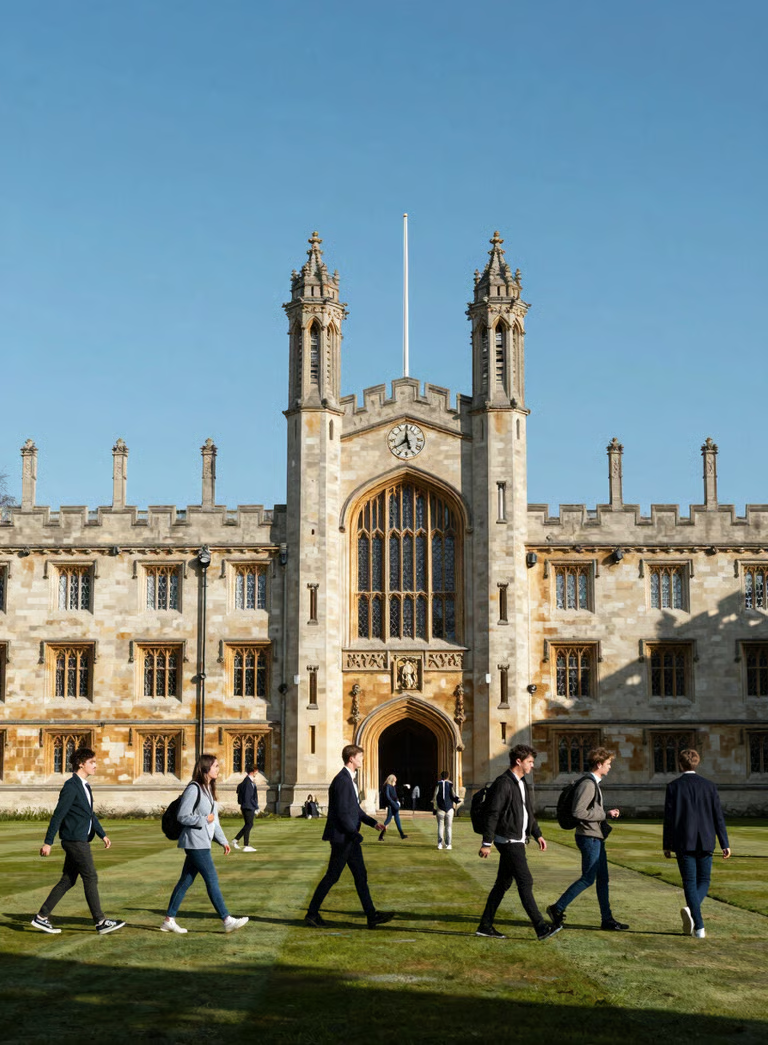

Every year, thousands of Nigerian students choose to study in the UK from Nigeria, drawn by shorter degree programmes, globally respected universities, and a clear path to post-study work through the Graduate Route visa. If you’re one of them, this guide walks you through exactly what you need — from entry requirements to costs to the visa process — so you can plan with confidence.
Why Nigerian Students Choose the UK
The UK remains one of the top destinations for Nigerian students studying abroad, and for good reason. A UK undergraduate degree typically takes just three years, compared to four in the US or Canada, which means lower overall tuition and living costs even before you factor in exchange rates. UK universities also carry strong international recognition, particularly in business, law, engineering, and health sciences — fields where many Nigerian students build their careers.
Beyond academics, the UK’s Graduate Route visa allows international graduates to stay and work for up to two years after finishing their degree, giving you real time to gain experience or transition into a skilled worker visa.
Entry Requirements to Study in the UK from Nigeria
To study in the UK from Nigeria, most universities will ask for:
- WAEC or NECO results with at least five credits, including English and Mathematics
- A-Levels or an equivalent Foundation year, since Nigeria’s SSCE doesn’t map directly to UK A-Levels
- IELTS score of 6.0–6.5, though some universities accept TOEFL, PTE, or Duolingo instead
- A personal statement outlining your motivation and career goals
If your WAEC results alone aren’t enough for direct undergraduate entry, a Foundation year is the standard bridge — many UK universities run their own, and it’s a well-established route, not a setback.
How Much Does It Cost to Study in the UK?
Tuition fees for international students range from roughly £10,000 to £35,000 a year, depending on the course and institution. Medicine and specialised postgraduate programmes sit at the higher end; humanities and social sciences are typically more affordable. On top of tuition, budget for accommodation, which varies significantly between London and other UK cities — London will always cost more.
Many Nigerian students underestimate the visa financial requirement: alongside tuition proof, you’ll need to show funds covering living costs for your course duration, currently calculated per UK Home Office guidelines.
The UK Student Visa Process
Once you have an offer and a Confirmation of Acceptance for Studies (CAS) from your university, you can apply for a Student visa. The process generally includes:
- Receiving your CAS number from your university
- Proving financial capability to cover tuition and living costs
- Passing a tuberculosis test (required for Nigerian applicants)
- Submitting biometrics at a visa application centre
Processing times vary, so apply as early as your CAS allows — leaving it too late is one of the most common (and avoidable) mistakes students make.
Popular Courses Among Nigerian Students in the UK
Business & Management, Computer Science, Law, and Health Sciences consistently rank among the most popular choices, largely because they align with strong career prospects both in the UK and back home. If you’re unsure which course fits your background, this is exactly where a proper eligibility assessment helps — rather than guessing based on what’s popular.
Making the Process Easier
Studying in the UK from Nigeria involves a lot of moving parts — course selection, WAEC-to-UK grade conversion, visa timing, and application deadlines that don’t always align neatly. This is where working with a dedicated education pathway service makes a measurable difference, especially if it’s your first time navigating a UK application.
Check your eligibility for UK universities in under two minutes, and see which courses you genuinely qualify for based on your actual WAEC results and budget — not a generic list.
Frequently Asked Questions
Can I study in the UK with just WAEC results? Yes, though most universities will require a Foundation year first unless you also have A-Levels or an equivalent qualification.
Is IELTS compulsory for Nigerian students? Most universities require it, but some accept alternatives like TOEFL, PTE, or Duolingo, and a number waive it entirely if you studied in English throughout secondary school.
How long does a UK student visa take to process? Standard processing is typically a few weeks, but timelines can extend during peak application periods, so apply as soon as your CAS is issued.
Ready to find your match? Check your eligibility with Citadel Education Pathway today.