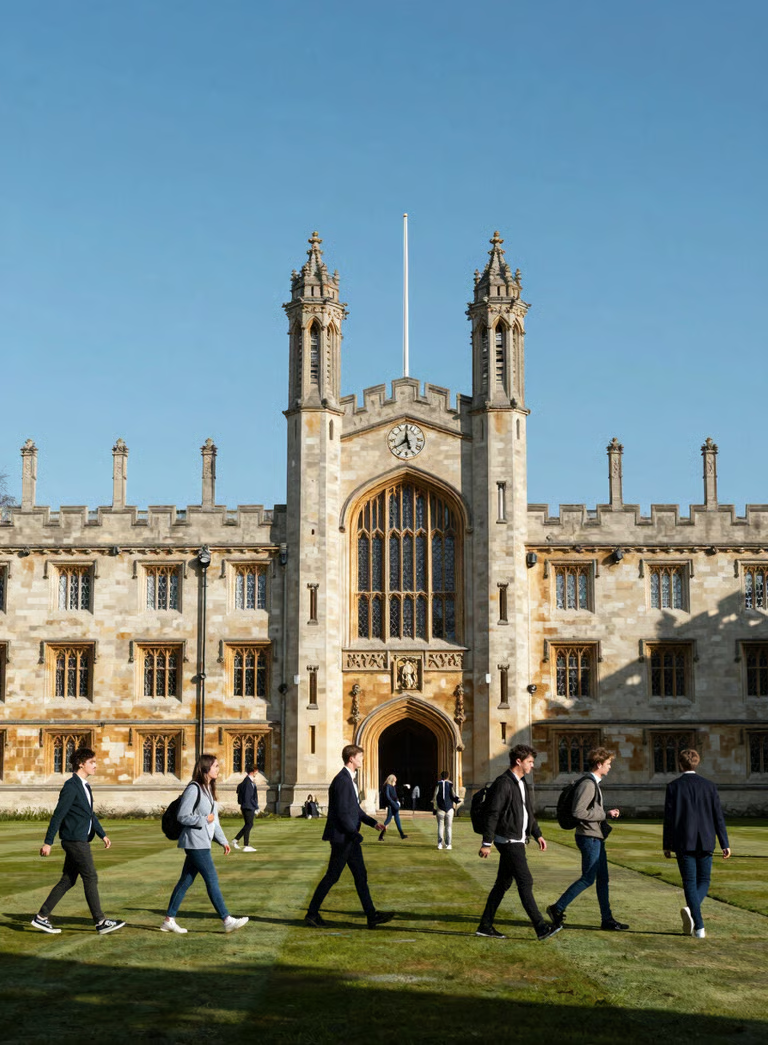

If you’re exploring options to study in Canada for African students, you’re looking at one of the most welcoming and career-friendly destinations in the world. Canada consistently ranks high for quality of life, offers a genuinely clear pathway to permanent residency after graduation, and hosts a growing, diverse African student community across its universities. Here’s what you actually need to know before you apply.
Why African Students Choose Canada
Beyond the reputation of its universities, Canada’s biggest draw is what happens after graduation. The Post-Graduation Work Permit (PGWP) allows international graduates to work in Canada for up to three years, and that work experience directly strengthens a future application for permanent residency. For many African students, that combination — strong education plus a real settlement pathway — is what makes Canada stand out against other destinations.
Tuition is also generally more affordable than the US for comparable programme quality, and Canadian cities are consistently ranked among the safest and most liveable in the world.
Entry Requirements for African Students
To study in Canada for African students, most institutions require:
- A high school diploma or equivalent (WAEC, NECO, KCSE, or matric, depending on your country)
- IELTS 6.0 or above, though some colleges accept other English tests
- A Foundation or pathway year if your grades or English level need strengthening before direct entry
- A Statement of Purpose explaining your study and career goals
Unlike some destinations, many Canadian colleges and universities offer well-structured pathway programmes specifically designed for international students who don’t meet direct-entry requirements yet — this isn’t a lesser route, it’s a genuinely common one.
Cost of Studying in Canada
Tuition typically ranges from CAD 15,000 to CAD 40,000 per year depending on your programme and institution, with business, engineering, and health sciences often at the higher end. Living costs vary by province — Toronto and Vancouver are pricier, while cities like Winnipeg or Halifax offer more affordable options without compromising education quality.
When budgeting, don’t forget the Canadian study permit’s proof-of-funds requirement, which covers tuition plus a set living-cost threshold for you (and any dependents, if applicable).
The Study Permit Process
Once you have a Letter of Acceptance from a Designated Learning Institution (DLI), you can apply for your study permit. The general steps are:
- Secure your Letter of Acceptance from a DLI
- Show proof of sufficient funds
- Complete biometrics and, if required, a medical exam
- Submit your application online through IRCC
Processing times vary significantly by country of application, so always check current estimated timelines and apply with a comfortable buffer before your intake date.
Popular Programmes Among African Students
Computer Science & IT, Business, Health Sciences & Nursing, and Engineering are consistently the most sought-after fields — largely because they combine strong Canadian job demand with skills that translate well internationally. Nursing in particular has become a major draw given Canada’s ongoing healthcare workforce needs.
Getting the Right Match, Not Just Any Offer
The challenge most students face isn’t finding a Canadian university — it’s finding the right one for their specific grades, budget, and career goals. A generic list of “top Canadian universities” doesn’t tell you which ones will actually admit you or fit your budget.
Check your eligibility for Canadian universities and see real matched programmes based on your actual academic background — not a one-size-fits-all ranking list.
Frequently Asked Questions
Do I need a pathway year to study in Canada? Only if your grades or English proficiency don’t meet direct-entry requirements — many African students go straight into their chosen programme.
Can I work while studying in Canada? Yes, international students can generally work part-time during term and full-time during scheduled breaks, subject to study permit conditions.
Is it easier to get permanent residency after studying in Canada? Canada’s PGWP and points-based immigration system do make the pathway more structured than most countries, though it still requires meeting eligibility criteria after graduation.
Not sure where you stand? Check your eligibility with Citadel Education Pathway and get matched with real Canadian programmes today.